Trying to choose between an Ocean City condo and a beach home? It is a common shore-market question, and the right answer depends less on what sounds better and more on how you want to live, budget, and maintain the property. If you are weighing convenience, privacy, rental plans, or long-term costs, this guide will help you compare the tradeoffs clearly so you can move forward with confidence. Let’s dive in.
Why Ocean City ownership is different
In Ocean City, flood exposure is not a side issue. The city states that all of Ocean City is in a flood plain and that the island can face serious flooding from the ocean and bay during hurricanes and other high-tide storms.
That means whether you buy a condo, townhome, or detached beach house, you will want to review flood maps, understand insurance exposure, and factor those costs into your budget from the start. In this market, property type matters, but location and flood risk matter just as much.
There is also a recurring beach-use cost many buyers overlook. Ocean City requires beach tags for beachgoers age 12 and older, and those fees help fund beach maintenance, lifeguards, trash removal, equipment, and police protection.
What counts as a condo or beach home?
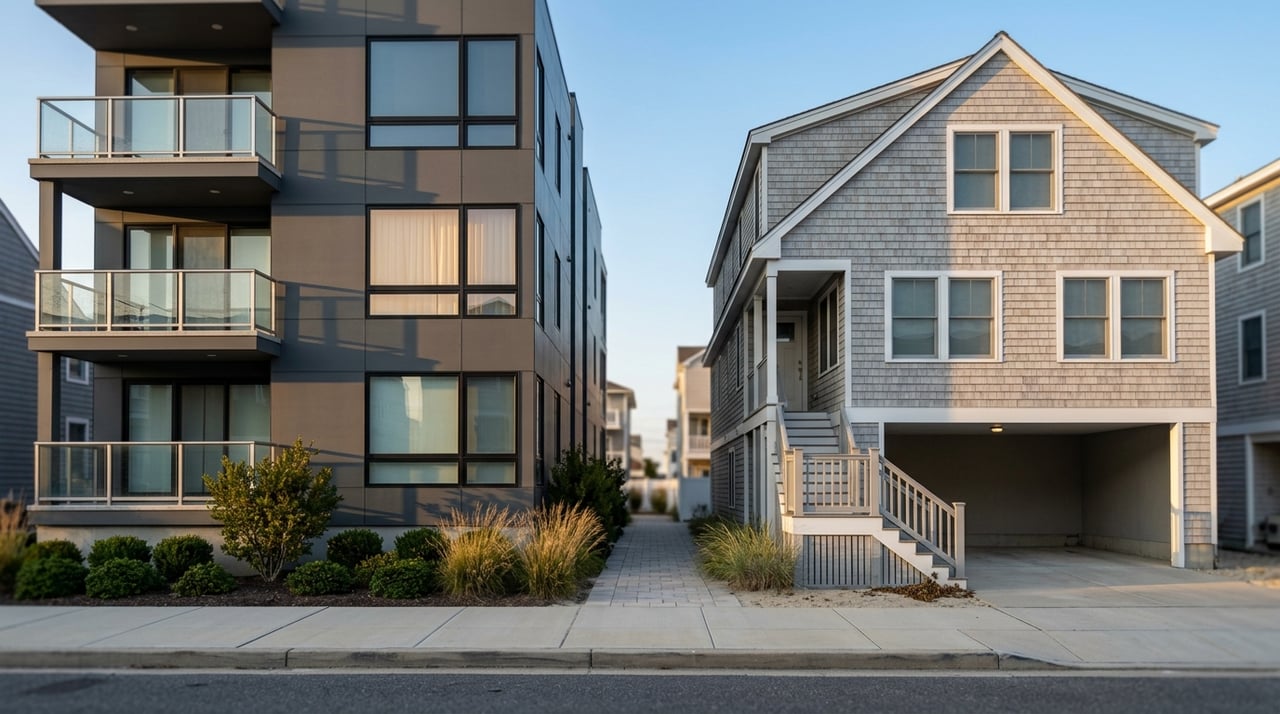
Before comparing options, it helps to define them clearly. In Ocean City, a condo is an individual unit in a larger building or community, while a detached beach home is a stand-alone house where you own and maintain the property more directly.
Townhomes often land somewhere in the middle. They may share walls and have a more house-like layout, but the ownership and maintenance setup can vary widely depending on whether the property is part of an HOA community or a condo-style project.
That distinction matters because appearance alone does not tell you who handles the exterior, what rules apply, or how rentals work. The deed, bylaws, and association documents are what give you the real answers.
Ocean City condos: the case for convenience
For many buyers, the biggest advantage of a condo is simplicity. Condo ownership usually means you jointly own common areas, and your condo fee often helps cover exterior repairs, common-area maintenance, and sometimes water, sewer, trash, and recreational amenities.
That setup can be a strong fit if you want a lock-and-leave property. If your goal is an easy beach getaway with less hands-on upkeep, a condo may feel much more manageable than a detached home.
Condos also come in different formats. They may be high-rise, midrise, garden-style, or townhouse-style, so the day-to-day experience can vary depending on the building and community.
Beach homes: the case for control
A detached beach home usually gives you more control over the property. You typically have more say over the space, more privacy, and fewer shared walls or common areas to navigate.
That extra control often appeals to buyers who want room to spread out or simply prefer a more independent ownership experience. If you value privacy and flexibility, a detached home may feel more like the classic shore-house setup you have in mind.
The tradeoff is maintenance. With a detached home, more of the upkeep falls on you, and that can include exterior repairs, ongoing maintenance, and the many small tasks that come with owning a stand-alone property near the coast.
The biggest tradeoff: fees versus responsibility
The heart of the condo-versus-house decision usually comes down to this: Do you want to pay monthly fees in exchange for shared maintenance, or do you want more control and more responsibility?
With condos and many townhomes, HOA or condo fees are separate from your mortgage. Those fees may cover items like trash removal, water and sewage, lawn care for common areas, pest control, and repairs to common areas.
That can make monthly planning easier, but it does not eliminate risk. Fees can rise over time, and associations may also require special assessments for major projects or unexpected repairs.
With a detached beach home, you usually avoid condo-style monthly fees, but you take on more direct responsibility for repairs and maintenance. Instead of sharing those costs through an association, you are planning and paying for them yourself.
Questions to ask before buying a condo
If you are leaning condo, do not stop at the monthly fee amount. You will want a full picture of what the association covers and how well the building or community is run.
Key questions include:
- What does the HOA or condo fee include?
- Is parking included, assigned, or limited?
- How strong are the association reserves?
- Are special assessments likely?
- What does the master insurance policy cover?
- Does it cover only common elements, or does it also extend into parts of the unit interior?
These answers can affect your true monthly cost and your comfort level as an owner. A lower fee is not always the better deal if the reserves are weak or major repairs are looming.
Financing can be easier or harder by property type
Many buyers assume financing is mostly about their own credit and income. In a condo purchase, the project itself can matter too.
One important question is whether the condo is considered warrantable. Buyers using certain loan types may also face project-level review tied to factors such as insurance coverage, financial condition, title issues, pending legal action, and physical condition.
That does not mean condos are a bad option. It simply means condo financing can involve one more layer of due diligence, so it is smart to ask about financeability early rather than late.
Rentals in Ocean City: local rules matter
If you may rent the property at any point, Ocean City’s local requirements deserve close attention. The city states that all residential and commercial rental properties need a Mercantile License, also known as Rental Registration.
The city also requires rental-unit owners to carry at least $500,000 in liability insurance and to register the certificate annually with the city, naming Ocean City as certificate holder or additional interest. Registration permits run from June 1 to May 31.
There is another rule to keep in mind for some long-term rentals. Pre-1978 residential rental dwellings rented for six months or more are subject to periodic lead-based paint inspection rules.
Association rules can limit rentals too
Even if city rules allow a rental, the building or community may still set its own limits. That is why reviewing the condo or HOA documents is so important before you buy.
Association rules may affect rentals, parking, exterior changes, pets, noise, and other day-to-day use issues. If earning rental income or keeping the property flexible is part of your plan, you will want to confirm those policies in writing.
This is especially important in condo and townhome communities. A property may look like a strong rental candidate on the surface, but the governing documents may tell a different story.
Which option fits your lifestyle best?
For many buyers, the best choice becomes clearer when you think in terms of lifestyle instead of property labels. A condo usually works best for buyers who want lower maintenance and an easier getaway property.
A townhome can fit buyers who want a more house-like layout without taking on every exterior task themselves. A detached beach home often fits buyers who want the most space, privacy, and control over how they use and maintain the property.
None of these options is automatically better. The right fit depends on how often you will use the home, whether you plan to rent it, how hands-on you want to be, and how much unpredictability you are comfortable carrying in your budget.
A simple Ocean City decision checklist
As you compare properties, keep these checkpoints front and center:
- Review flood maps and flood insurance exposure
- Compare HOA fees against the maintenance you would handle yourself in a house
- Ask whether parking is included or assigned
- Check reserve strength and the chance of special assessments
- Confirm whether the condo is warrantable or otherwise financeable
- If you plan to rent, verify city registration and insurance requirements
- If the property is older and may be rented long-term, ask whether lead-based paint inspection rules apply
This list will not make the choice for you, but it will help you compare options in a way that matches real ownership costs and responsibilities.
Bottom line: choose based on how you want to own
In Ocean City, the condo-versus-beach-home decision is really about your ownership style. If you want convenience and lower day-to-day upkeep, a condo may be the better fit. If you want more control, privacy, and independence, a detached beach home may be worth the added responsibility.
The best move is to compare each property through the lens of flood exposure, monthly carrying costs, rental plans, and maintenance expectations. When you do that, the right choice usually becomes much easier to see.
If you are thinking about buying in Ocean City and want practical guidance tailored to your goals, The McCann Collective is here to help you weigh your options and make a smart move with confidence.
FAQs
What is the main difference between an Ocean City condo and a beach home?
- A condo usually offers shared maintenance and common-area ownership through an association, while a detached beach home usually gives you more privacy, control, and direct maintenance responsibility.
Are all Ocean City properties in a flood zone?
- Ocean City states that all of the island is in a flood plain, so flood exposure is an important factor for condos, townhomes, and detached homes alike.
What do Ocean City condo fees usually cover?
- Condo fees often cover exterior repairs, common-area maintenance, and sometimes utilities or amenities such as water, sewer, trash, and recreational spaces, but coverage varies by association.
Can you rent out a condo or beach home in Ocean City?
- You may be able to rent either property type, but Ocean City requires rental registration and liability insurance for rental properties, and condo or HOA rules may also limit rental use.
What rental insurance does Ocean City require for rental properties?
- Ocean City requires rental-unit owners to carry at least $500,000 in liability insurance and to register the certificate annually with the city.
Why do association documents matter for Ocean City condos and townhomes?
- Association documents can spell out rules for rentals, parking, pets, noise, exterior changes, maintenance obligations, and insurance, all of which can affect how you use the property.
Is financing different for an Ocean City condo?
- Yes. Condo financing can depend not only on your finances but also on the project itself, including whether the condo is warrantable and whether the building meets lender or program requirements.