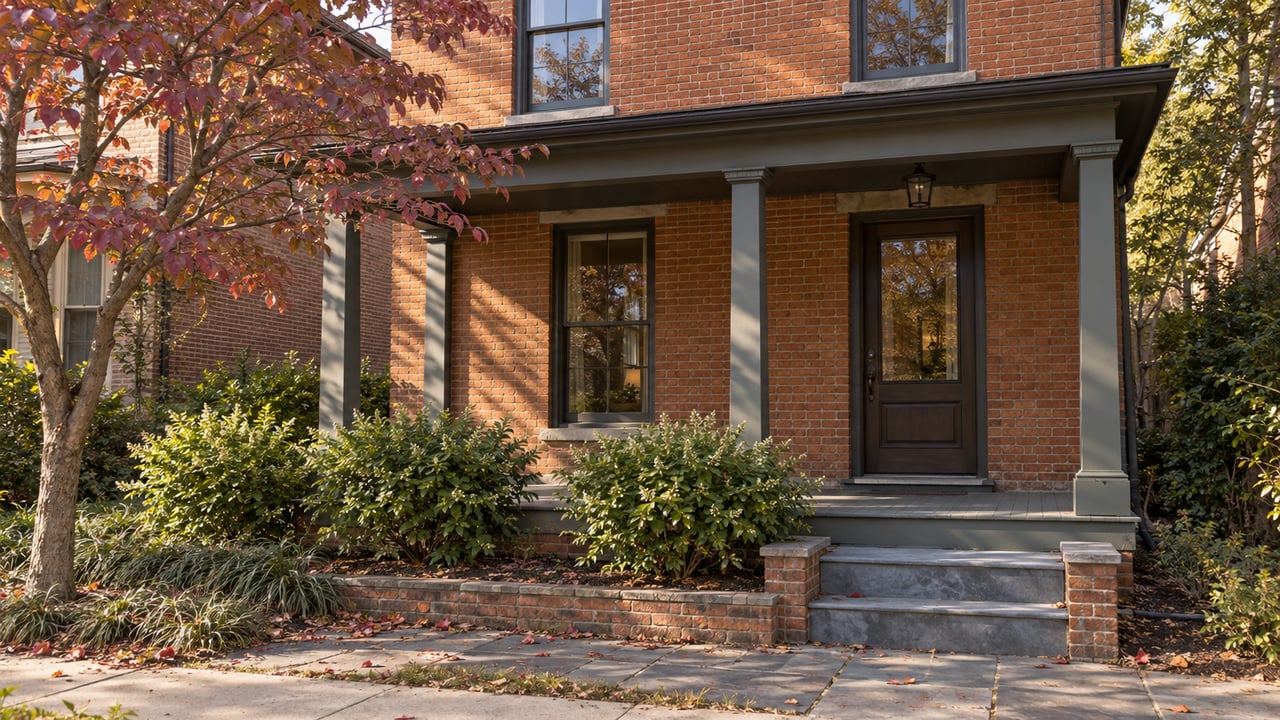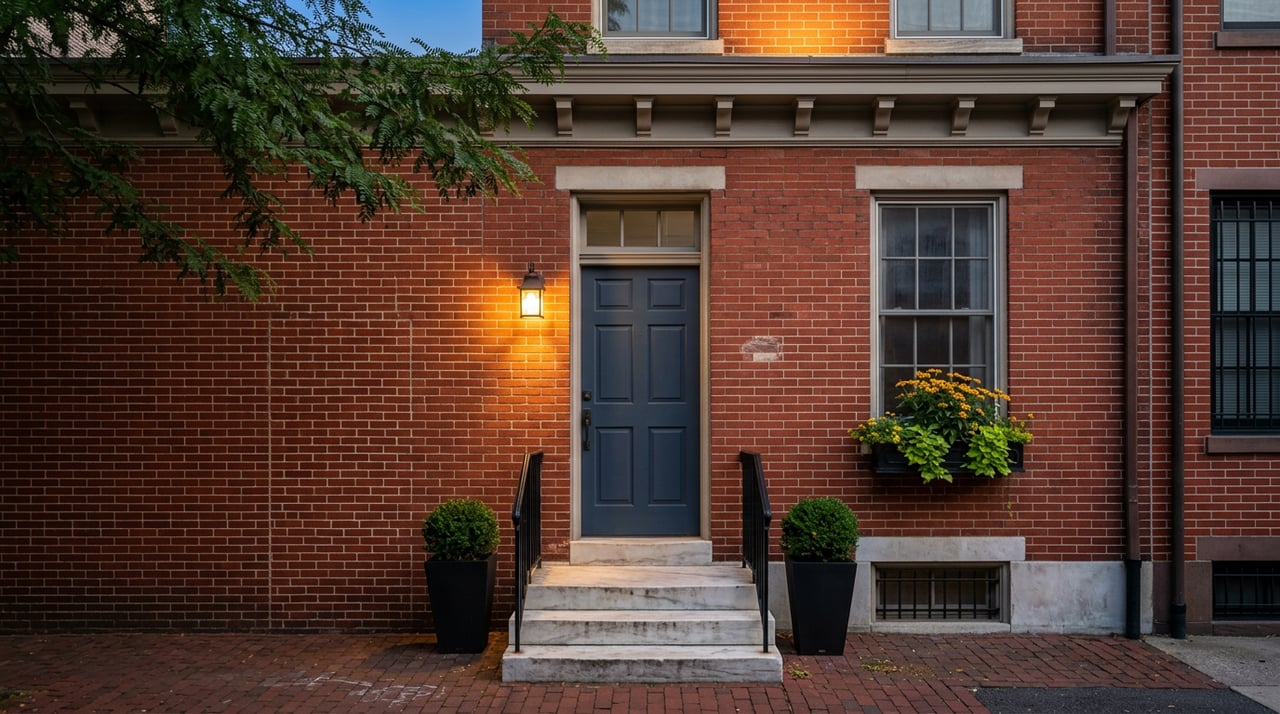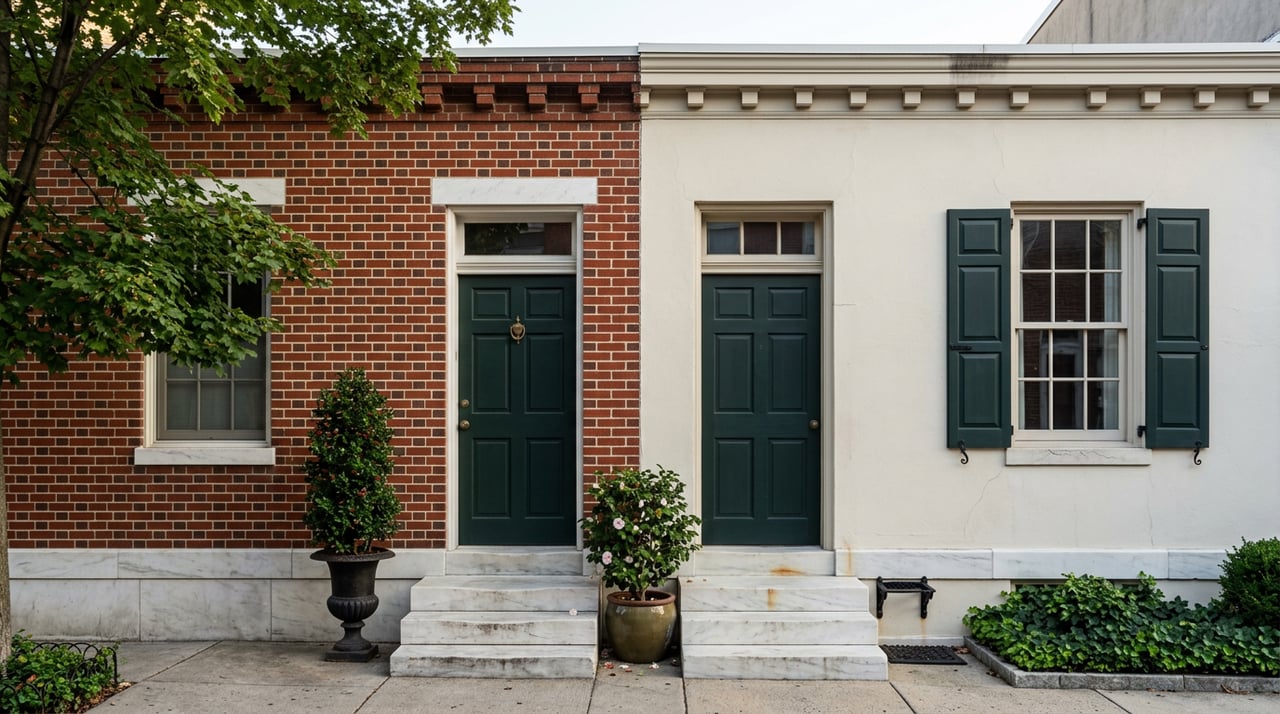
For most of this summer, if you walked down 2nd Street past Pine on a Sunday morning, you saw the same odd juxtaposition: a chain-link fence wrapped around the Head House, scaffolding tucked against nearly 300-year-old brick, and twenty feet away, vendors setting up produce stands under the Shambles like nothing was happening at all. The farmers market never stopped. The construction never really slowed it down. If you didn't already know what was going on behind that fence, you'd assume it was just another aging building getting patched up before it fell apart.
That's not quite the story. The fence came down for a $1.5 million restoration led by the New Market & Head House Conservancy, a nonprofit that only took over stewardship of the site in 2025. The work itself, brick repointing, roof and window repairs, restoration of the cupola woodwork, a new ground-floor bathroom and office space, and a full restoration of the Head House's historic clock, sounds like standard preservation housekeeping. But the people behind it have said the quiet part out loud: this was never just about saving a landmark. It's an attempt to fix a problem that a previous public redesign a few blocks away already tried and failed to solve.
What's Actually Being Fixed
The scope of the current phase, handled by W.S. Cumby Construction on plans from John Milner Architects, covers the building's most urgent structural needs. That includes the clock specifically, and it's a better story than "the clock got fixed." The Head House timepiece was made by Isaiah Lukens, the same clockmaker responsible for the clock at Independence Hall a few blocks north. Two buildings from the same era, same maker, same neighborhood, and until this year, one of them was quietly falling apart while the other got all the tourists.
Conservancy leadership had targeted mid-July 2026 for this phase to wrap. As of late August, the building work driving that fence and scaffolding should be substantially behind us, though the project's second phase is still being funded. That next round, an additional $300,000 to $400,000 by the conservancy's own latest estimate, covers the parts that make a building look cared for rather than just structurally sound: repainting, a new clockface, facade lighting, updated historical signage, and cobblestone repairs on the surrounding streets. In other words, the fence coming down doesn't mean the project is finished. It means the unglamorous half is done and the visible half is still ahead.
Why This Building, Specifically
Here's the part that doesn't show up if you only look at the construction timeline. Paul Levy of the conservancy told the Philadelphia Inquirer that the hope is for a more visible, more active Head House to help rejuvenate a district that, despite its popular restaurants and cafes, has sat with notable retail vacancies for years, including the long-empty former Second Street Wawa and CVS storefronts. That's a specific bet: that fixing the anchor building at the center of the square can pull commercial energy back into storefronts that have been dark for a while, even as the restaurants around them do fine.
It's also a bet made in the shadow of one that didn't quite land. The surface lot between Lombard and South, the space left behind after part of the original market was demolished decades ago, got its own redesign in 2021. What residents got back was a bricked plaza with a scattering of picnic tables and backless concrete seating, useful for passing through, not much of a draw on its own. If you've ever walked through that plaza and kept walking, you already understand why the conservancy chose to put its money into the building instead. A plaza can be redesigned and still not become a place people linger. A restored landmark with a fixed roof, a working clock, and a bathroom for private events at least gives people a reason to stay a little longer.
The lease structure backs up how deliberate this shift is. The site has always belonged to the city. For years it was leased to the South Street Headhouse District, a neighborhood business improvement group, for a nominal dollar a year, and that group used the grounds mainly for weddings and the weekly market. The new conservancy, formed specifically to take over renovation and programming, is finalizing its own dollar-a-year lease with the city, according to board member Greg Montanaro. The rent hasn't changed. What's changed is who's responsible for making the square do more than host one market day a week.
The Storefronts That Already Figured It Out
Whatever happens with the empty Wawa and CVS spaces, the food and drink scene immediately around the Shambles isn't waiting around. Bloomsday, the wine bar and bottle shop founded in 2019, has become one of the square's steadier draws, and Loretta's, the café and bakery that opened at the end of 2024, filled a gap that mattered more than it sounds: somewhere to grab a coffee before the market opens and somewhere to sit afterward and watch the cobblestones fill up. Pizzeria Stella remains the kind of anchor tenant that doesn't need an introduction if you've spent any time in Society Hill on a weekend.
That contrast is the real tension worth sitting with. The square isn't failing. It has restaurants people actually choose to go to, a market that's run without interruption through an entire construction season, and a food and drink identity that's grown steadily over the past several years. What it hasn't had, at least not yet, is retail continuity along the storefronts that surround all of that. The conservancy's bet is that a restored, better-lit, more programmable Head House becomes the reason those spaces finally get filled, not because the building itself sells anything, but because a landmark that looks cared for makes the whole block look like it's worth investing in.
What's Still Sunday-Only, and What Might Change
For now, the market itself hasn't changed shape. It's still Sundays, 10 to 2, run by The Food Trust, and still one of the city's largest, with produce, baked goods, flowers, and prepared food rotating through the Shambles the way it has for years. What the conservancy has floated, once the second funding phase closes, is using the restored space more regularly: family programming, private events in the new office space, and the kind of weekday or evening use that a market-only schedule never allowed.
None of that is locked in yet. The building work is largely finished or close to it. The money for the visible finishing touches, the new clockface, the lighting, the cobblestones, is still being raised. If you've watched the fence come down and assumed the story was over, the honest answer is that the part people will actually notice, a landmark that looks restored rather than merely repaired, is still a fundraising campaign away.
What's already true is this: 2026 gave the conservancy a real deadline. With Philadelphia carrying the weight of the country's 250th anniversary all year, a crumbling clock tower two blocks from Independence Hall was never going to age gracefully in public. That urgency is probably why this project moved as fast as it did. Whether it's enough to finally fill those long-vacant storefronts is the question the neighborhood will actually be answering, slowly, over the next year or two.
If you're the kind of person who already has an opinion about that plaza redesign, or you've got a stake in what happens to those empty storefronts on 2nd Street, The McCann Team has spent years watching how projects like this play out across Philadelphia's historic blocks. Let's Build Your Next Chapter, whenever this neighborhood's next chapter turns out to be.